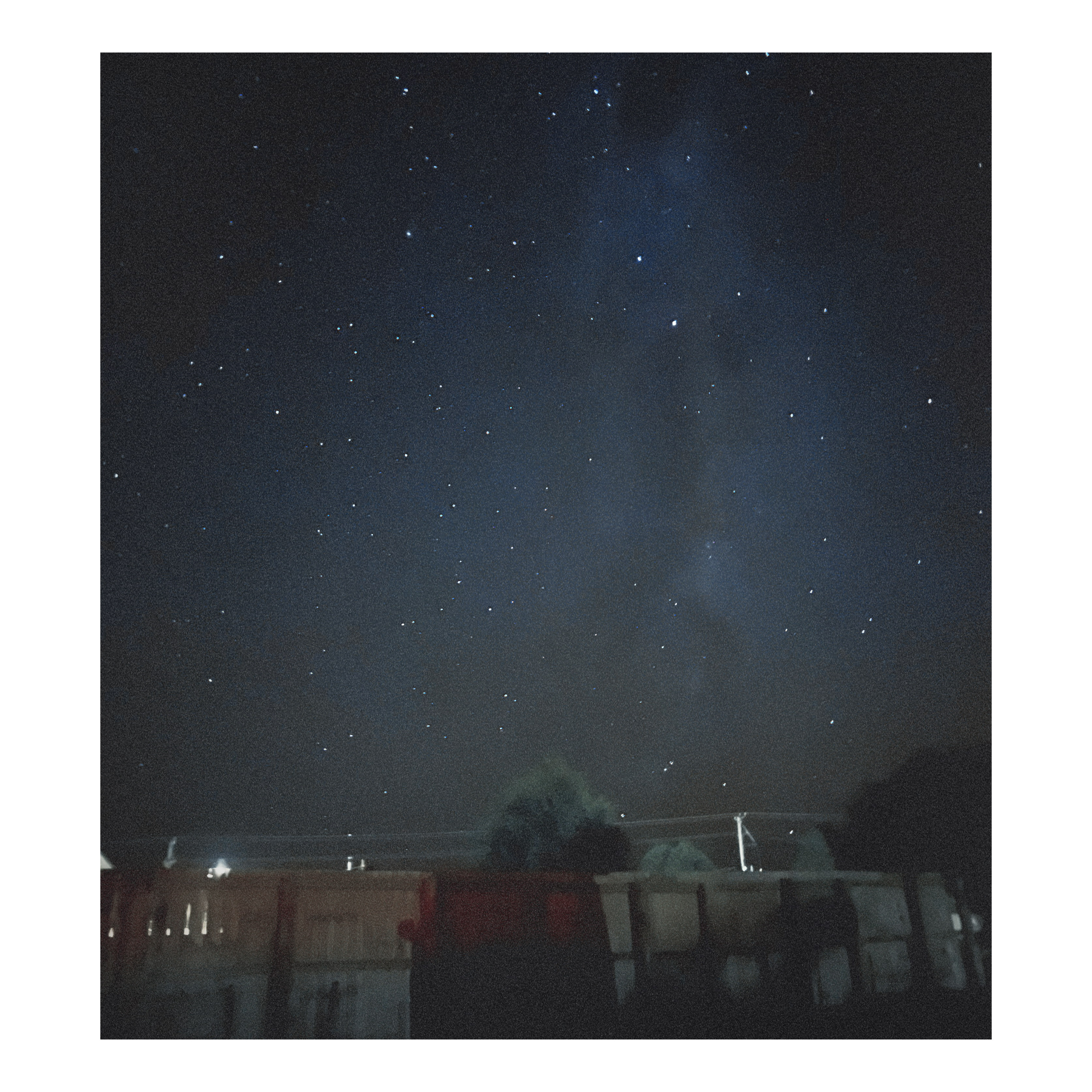
South
Reflecting on why I reckon change is good for me.

It's been nearly a year since we arrived in the South; since we rolled out of our lovely street in Caboolture and rolled in at the bottom of the planet. Ten months since we meandered down through lines of latitude and the eastern states of the Australian mainland, after a frenzied month of packing up our lives. We turned up in Tasmania frazzled, having kept the sourdough starter alive, and dragging more belongings than common sense should permit. I write this as Olive has asked for her ‘little brown heart’ which is a piece of plywood the size of a ten cent piece. She is upset that she hasn’t seen it lately. I explain that it might be lost, which is to say, I probably collected it in a dustpan with three thousand other small bits in the final sweep of our Queensland house. Expectations managed, we open a box with her name on it, and the brown heart is right there on top of a pile stuffed toys. I revel in the luckiness, knowing such a miracle is not likely to befall me again.
It seems like nothing now that it’s done, moving a life across the water, but it felt like an almost insurmountable risk before the decision was made. The life we had in Queensland was about as perfect a life as I could have imagined for myself, there was nothing I could point at to explain the yearning for change. I had an inkling that there is something dormant in me, a creativity, maybe an idea, or some project that wants some time in the spotlight, but no idea how to hand over the reins to that little tug. I went with the chemical reaction method; take a perfectly excellent life, add some stress, excitement and fear, apply pressure, agitate for a few months, turn it out in a different environment and see what happens.
I hadn’t seen the house, or even visited the area before we signed the contract. Lee had been on reconnaissance missions all around the state, facetiming to show me the places we were considering. I just trust him. He knows me, he knows us. He’s good at reading vibes, better than me, and he nailed it. Not just the house, which is an excellent assortment of hundred year old rooms and walls and floorboards with wide gaps, but it’s the right town too. It’s not just ‘in Tasmania’ which was our only real requirement, but it’s a lovely, tiny, rural town in the remote North East. It is rolling paddocks full of working animals, surrounded in every direction by mountains and wilderness.
We arrived in the thick of winter. Straight off the boat and over the mountains on the road we now call the Twisty Turns. Switching back and forth on a skinny track through glistening, cold rainforest. I saw flashes of the agricultural landscape through the ferns and trees. Down over cliffsides I saw sunlight flash off threads of silver water in the valleys. “Nice spot, hey?” Lee said quietly, hoping he got it right. I could barely breathe it was so beautiful. He got it right. I get the same feeling every time I drive that road to go to Woolies. Nice spot indeed.
I didn’t know it at the time but I arrived here sick. Depleted. My blood needed fixing. A collection of lovely, worried doctors fixed it, with donations from strangers. I’m like our house, full of second hand things. I’m better now, but the landscape was solace to me while I recovered. Quiet hills, empty except for cows and birds and pools of dark water. The days were brief, melancholic splashes of pastel light across the hilltops. The nights were longer and deeper and clearer than I’ve ever known. The lack of people to interact with forced me inwards, to look not just at the state of my body while it mended, but at my mind, without the benefit of others to reflect off. There’s a thread of thinking and writing to be done about the way my mental and emotional structures dissolved as my blood levels quietly disintegrated. Something about the theatre of my mind being revealed to me. I might be able to get a handle on it with a bit more distance.
In correlation to the slower pace of where I live now, and probably a lack of blood to the brain, I’ve felt a slowing of my mind. A slower mind is open to slower experiences. Long form everything; reading, conversations, artworks, activities, music, meals. I’m like a tuning fork resonating with a new tone. Different things are appearing in my field of vision and I can notice them now. Things that used to bounce off me because I was moving too quickly. The way details blur in the window of a moving car, you miss things you would have seen had you got out and walked. I’ve read stories of madness and loneliness in the wilderness, out in the hills. Of lighthouse keepers and fire watchers and weather station attendants losing their minds to the wilds. To be fair, I’m very much not in the wilds, but it feels like my mind is coming back to me here. I’m reeling it in. Like a weaver grasping and reclaiming all my fibres that were flung loose through the suburbs, attached and reliant on everyone and everything, and spinning them back into something more solid; a single, strong strand. The kind of strand you might be able to make something out of.
I am getting an education in long form waiting too. Things take a lot of time here. Not just deliveries for online orders, which really do just take so much time. I mean waiting for responses to questions, for people to read things, scanning groceries, checking out the back for a particular item at the hardware. I can’t emphasise enough that this is not a problem. The quickness with which something happens is not the measure of its success. In a big town, with thousands of people getting things done in close proximity to each other, the need for systems and categorisation arises; in that scenario, efficiency helps to reduce conflict. Here, being too quick to move through the world causes the conflict. “Slow down Turbo” they say. I find myself wanting to take time to understand things before I give an answer. I see the way I’ve always tried to understand things immediately; to form an opinion, offer my stance on things so I can be sorted and categorised amongst the throng. My need to avoid the conflict of taking too much time weighing more heavily than my need to understand a thing.
I am surprised by the feeling of safety. To my mind, living in a remote place should feel a bit less safe than a big town. Instead, I’ve found if you are clever, watchful, respectful of insects, farm equipment, vehicles, and people, there’s so much space that you can basically see trouble coming from a long way off and make a move to avoid it. In a city, there are more resources and ways to be safe, but there is much more to watch for, and it’s moving faster. At any moment one of ten thousand vehicles could smash into you and one of twenty thousand people can cause a drama you weren’t prepared for. It seems easier to avoid physical, social and emotional danger when there are less things to keep track of.
On safety, it feels like my own responsibility. Compared to life in a big town, there is a real feeling here of not being policed, of being left to my own devices. There are less guardrails, fewer lines, fewer directives. The roads out here aren’t fixed as often as in the cities so bits fall away and it’s my responsibility to drive around the problem. There are no arrows on café floors to keep people in manageable lines. No lights telling me when to stop and when to accelerate. No need for systemic, orderliness to keep on top of the constant flow of people. I’m not part of a crowd, I’m just one person and I don’t need to be managed. How I get through the world is my responsibility, as are the consequences of doing it wrong. If I miss a social cue, someone will point it right out. If I don’t watch the roads, I’ll drive into a pothole. If something goes wrong, it’s my own stupid fault.
I see, from here, ten months on, that I had layers of small anxieties from living in a busy place. Despite the peace I maintained, things piled up inside my body, and meant I was operating at close to my capacity a lot of the time. Little things, like trying to turn right onto a busy road, then deciding to turn left and do a u-turn instead because the traffic seemed aggressive. Wondering if I locked the door before I left. Wondering if the kid’s bikes would still be there when I got home. Driving through ten sets of traffic lights. Dodging 25 kids on scooters. A maniac in an Uber, 15 delivery vans, buses merging without glancing at me, garbage trucks waving bins in the air and three instances of roadworks. To get where I’m going and find there’s only a few assigned carpark spots which are all taken and I’ll have to drive around until someone leaves, or choose to reverse parallel park a kilometre away from the office when I’m already late. Then there are orange flags and plastic cones and signs directing me where to line up. I stand in front of the little e-machine, press the wrong buttons until I realise that it needs to be handled just so, to get my assigned number. I am in the queue, sitting on a hard plastic chair not wide enough to comfortably cross my leg, next to others who can’t cross theirs either. The staff are rushed and impersonal, how could they not be when there are 50 strung out people in line at 9:30am. Just to renew my licence. And then, having achieved that, on to the shops to get groceries and add those layers to my system too. For the longest time I truly thrived on that building pressure. Quick thinking, quick responses, navigating all the things one after the other made me feel electric, like I was winning.
By comparison, to change my licence here, I drove half an hour through forest and fields to the library, had a chat with the lady about some new books on the shelf while she checked my documents. Most of my errands now have a similar vibe. The capacity that those errands used to take up in my body, is empty and ready for other things. It’s not better, it’s just different. My errands don’t feel like a challenge to be won, just a task to be carried out.
This is a working farm town. There’s not much patience here for the imitation of cutesy, bucolic scenes. There’s a deep practicality that underpins everything, and a sense of having to work together to make things run as they should. It is a beautiful town, with lovely old timber homes and backyard chickens and flowers spilling out over fences, and trees with leaves that change colour in autumn. But the beauty is not on purpose, not the way a tourist town paints distress onto buildings to give the impression of pretty shabbiness. Practicality first, and out of that comes beauty. Women with hands scrubbed raw, farmers with arms like a side of beef. Hardwood timber, milled local. Rusted gates, still good. Nan’s prize roses climbing a trellis. A hand knitted beanie, double yarn for warmth with a complex pattern for the fold. There’s money here, as there is everywhere, but the real currency is hard work, and man do they work hard. It doesn’t seem to matter what you do, so long as you get up and do it. Many of my people are hard workers so I can recognise it. I’ve never really seen myself as one, though I suppose I’ve always been productive enough. Maybe I’ll be inspired to start cleaning my house with some discipline. Seems unlikely. I probably should get my shit together though.
Hard work as a virtue has the function of being something like religion; it is the structure through which relationships are filtered and formed. Respect is borne of recognising the trait in each other, and once respect is in place, personalities can reveal themselves. The softnesses, the lighter parts, the interesting bits. The fella who relocates barn possums rather than “sorting them out” the other way. The farm hand who loves to talk about art. The truckie at the pub who knows the secret spot for prettiest sunset. The woman next door who runs an extremely tight ship, and squeals with delight about her flower garden. Laziness is akin to sin. It’s fine to be someone who operates with whimsy and lightness, but it might only be acceptable once you’ve shown that you’re also, and foremost, a practical and productive member of the community.
There are tensions of course, things that simmered long before we arrived here but we’re starting to understand the network of feelings that make up the web of experiences in this little town. None of the tensions are ours yet, which is the blessing of newcomers, but as is the way of humans, we’ll inch our way into things and we’ll have to get things sorted as they arise. My sense from the outside, is that the flash of division I can see is a concentration of the wider division we see mirrored in bigger towns and in societies and countries everywhere, it’s all very familiar. With fewer people, the microcosm is concentrated, you can look right in its eyes. Humans are humans everywhere. For every fellow that thinks newcomers aren’t worth knowing, there’s a woman with a tray of apple crumble, a jug of custard and an invitation to morning tea. We’re all just doing what we know how to do.
There’s exposure here. I feel exposed to the constant change of the gigantic open skies. The wind that careens over the hills from the West, pushes against trees and houses and makes me think the roof will peel off at any second. The weeks in August listening to corrugated iron flap against old timber sheds across town, wondering how long the nails would hold. At least a century apparently. There is nothing constant with the onward march of the seasons. In the suburbs, the built environment was so solid, so sturdy and permanent, that my routine within the buildings was basically unaffected by weather. The incessant rain we had over the last handful of years in Southeast Queensland was outside of our lives which, unless we were flooded in, carried on much the same. Here I’m IN the changing environment. It impacts everything, not just what I wear or whether I go out or not, but my mood, my plans, my overall view. There’s no barrier. It’s exhilarating, like being on the back of a motorbike going a bit faster than you’d like. In amongst it all, at the mercy of it, vulnerable.
People talk about the weather a lot, like they do in every place, but it doesn’t feel like small talk. It’s big, important, crucial talk. People’s livelihoods, health and mental wellbeing are deeply affected by the weather. The “we need it” when they talk about the rain is underpinned by an anxiety that’s been passed down in their bones. There’s a precarious balance between how much rain is a blessing, and how much is way too much. This is the first time I’ve been in such close proximity to a community so in tune with the shifting skies.
We let the kids land slowly. They missed a term of school but they went back a grade so in the scheme of things they’ll be doing more school I guess. Everyone tells you it goes fast. I believe them. Robin has grown 30 centimetres, and he’s taken big leaps towards becoming a man. He’s stepped out from under my apron, not without some emotional difficulty from both of us, and almost wholly into Lee’s guidance. I can’t put my finger on the things that have changed, but everything has. He’s his dad’s boy now and it feels right. He had more than a decade latched to me, learning to be soft and love nature and romance and sentimentality and big philosophical ideas, and now he is marching headfirst into banter and productivity and strength and boundary pushing – it’s all foreign to me, but I’m glad he’s got Lee to show him the ropes. The boys are tough here, farm kids, forming their sense of self and humour to reflect the even tougher men in their lives. It’s been a fairly complete upheaval for Robin, it took some months to recalibrate, to figure out what mask to put on to move through the social spaces here. He's been disappointed by some things, equally lit up by the realness, and tickled by the things you can do with a rotten pumpkin in a field with the right pair of boots. We’re working on it together. Figuring out the kind of person he’d like to be.
Olive is little and very much in the flow of going along with whatever we do, as is the way of littleness. She is enjoying school though, which is nice. She started prep last year in Queensland, and it wasn’t the right time. For her, or us. It was one of the things that made us make a change. For us it felt like we were beginning the same decade long cycle again. In any case, the way the school years work here meant she went back to Kinder, just three days per week, which was the right way to introduce school into her little system – bit by bit. There are plenty of days off. It doesn’t take much to convince me that we need a family day in the forest. When one of us is having a rough week, it won’t take long for that mood to spread, so I try to act fast.
In a rural town, there is less exposure to different types of people. It occurs to me that my kids might grow to become a little less tolerant of the wide swathes of sorts of humans that exist, only interacting with people who look and sound like them. In a big town you get exposed to all the delicious languages and identities and bodies and aesthetics and cultures so the conversations about differences are easy to slip into the flow of parenting. I haven’t quite figured that out yet but, given the recent narrowing of our access to humanity, I’ve been surprised at a different kind of tolerance that has come forth. When there’s only a handful of people, you have to work with the ones you’ve got. Bulk people seem to accidently break off and categorise themselves with people they like well enough or identify a common trait with. Here there are no other options and so, for example, if you disagree with a tradie or find a classmates personality to be abrasive, you just have to find a way to tolerate each other so you can get the project done. It’s an interesting nuance to have come across and has allowed for the tolerance conversations to come up naturally.
There’s a real sense of socialism in action here, not that anyone would dare use that word for it, given the way rural towns usually vote. People are pretty heavily involved in community endeavours, it feels like a silent expectation that those who can help, must. Everyone knows everything about each other, and it definitely could feel nosey or intrusive, but to me it feels like everyone is checking in to make sure everyone else is OK. Kids are fed at school and entertained with activities at the hall. The flow of resources is constant. I can’t overstate how much produce and food and help and generosity has been offered to us. I do try not to think too much about how the way I love the environment is pretty starkly different to the way others love the environment; its the same everywhere, and there is care there, even if it is only for its economic value. Anyway, I love a rose-coloured lens but I just don’t feel as affronted by opposing politics as I thought I might, perhaps because politics aren’t so heavily overlaid on things, and real life action by real life people feels well aligned with my sense of what’s right.
I met a fellow once, someone who had dropped in to talk to Lee about a car. We stood in the shed chatting over cool drinks. He asked about us and we asked about him, as you do with strangers. He seemed shocked when I told him about our life in the suburbs, he said “Well, you could have fooled me, you really seem like country people.” I wondered what he meant at the time but I see now, for whatever reason, we do seem to fit OK in a country place.
We came here needing a rest, and we’ve had plenty. I thought the stillness would last a bit longer, maybe even forever, but the old motivation centres are firing up again. We can afford to live here very easily. We bought a cheap house we could comfortably live in without spending money on renovations, and our standards for what makes a house liveable are pretty low, so we have no mortgage. The day to day expenses are just less here. There are not many conveniences, no cinema or play centres, no shopping centres, nowhere to go to spend money when we’re bored. There are forests, and creeks, and lakes and bike tracks and farms and fires and books. There is a wood-duck and wedgetail eagle performance in the sky above our house every afternoon. There is a very good woodfired pizza place, and a very good pub which we frequent. The produce is absurdly abundant, there are eggs and veggies and bread and fruit and relish piling up on the bench. And so, now that our bodies and minds and bank account have laid fallow for a season things are starting to liven up again.
We brought our sign making workshop equipment with us, with the expectation that Lee would just continue to service our mainland customers by freighting out print work. But it’s Lee, so obviously he sees ten opportunities a day; his work is to filter them and figure out what he actually wants to spend his time and energy doing. It feels like there are choices, we’re not pressured by financial need or crowded out of our fields so the economic balance is more in our favour here. It's not just that money seems to last a bit longer, it’s that the skills we have are valued differently where there’s not an oversaturation. We are trying to find the right balance of rest and industriousness.
I kept my job which has been remote for a long time and is a lovely, familiar anchor to pivot my time around. I have spent my free time reading, thinking and noticing. I’ve written but not finished ten different songs. Jotted down 120,000 words of a story that hasn’t yet revealed it’s form. I’ve painted and photographed and made poems, and I’ve begun organising a theory of everything, picked up threads of philosophy and experience and tugged on them to see where they lead and how they intersect. With nothing to entertain me, with no conveniences to call on, I’m spending a lot of time in my own head. I am starting to wonder what the next decade of life might look like. The net is very wide but I’m circling on a few ideas that might light me up if I let them.
I miss my family but that’s OK. When people go off and do things for the right reasons, everyone is all the better for it. If there was some conflict we were avoiding, then it might feel different, but we’re good. We were good in each other’s pockets and we’re good at this distance. We’ll be moorings for each other, a place to shelter and hang out for a bit, but we’re not anchored there. The shape of the way we spend time together is different but in essence its always the same, just love.
Everyone asks about the cold. We’ve just come out of our first Tasmanian summer and after the ridiculously long days bleached by an absurdly hot sun, and unexpected second-degree sunburn, the cool change has been a relief. It was winter when we arrived and experienced all the novelties of a new place. We were holed up together, resting and discovering, giddy about all the new stuff that was happening. I noticed this month as autumn arrived that I had a lovely sense of anticipation about the coming winter. We’ve Pavlov’s Dogged ourselves into enjoying the cold. It’s the exhilarating fresh air in my lungs, and the gloriousness of coming back in. It’s going out into the shock of cold air, and then unpeeling damp layers to come back into a lounge room lit by a crackling fire, pulling on a fresh pair of thick socks and a heavy blanket. A hot shower and then slipping into a bed warmed by an electric blanket – oh my god, literally heaven. Hot coffee in the morning delivered by a pink nosed husband who braved the fog to mosey into town. It’s the exact but inversed feeling of slipping into a cool swimming pool after a long, humid day in the sub-tropics. The heat and the cold are two sides of the same coin. Prohibitive and spectacular equally.
I see that change is an instigator for growth. Like a fern in a glasshouse; the perfect, stable environment for a fern to live a long happy life. Exactly the kind of life any respectable young fern would plan out for themselves. But ferns are sometimes fascinated by the forest, so it gets up and heads out. It has to toughen up to cope with the wind and the irregular rain. It gets hassled by other trees and animals, rubbing and pushing and creating friction. So it decides to grow different, it builds a proper trunk and points itself towards the light, it sends roots down towards the creek. It’s a different fern now, still doing what ferns do but in a new way, in response to the friction caused by change. I think we’re drawn to change just to see how we’ll grow. It’s the call to adventure. It’s not necessarily for the change itself, but because of the shift it triggers on the inside. The destabilisation causes a growth response to meet the requirements of the new situation. Eventually stability is resumed, with new skills under the belt and new eyeballs in the noggin. The cycle starts up again and we’re drawn to something else outside of whatever has become the new ordinary. And the thing is, there’s no knowing who we’ll be on the other side, we’ve got to just make the change, let go and grow. Everyone is doing it all the time – they’re trying a career change, they’re travelling, they’re going through a divorce, they’re connecting with spirituality, having an affair, learning an instrument, starting a new hobby, deciding on a paint colour for the loungeroom, having a baby, picking up a different genre of book to read. There’s no knowing how the game will change once they make that particular move, there’s no knowing the kind of person they’ll grow into in response. It’s the discomfort, inconvenience, challenge and destabilisation of something different happening that we’re searching for. Well, that’s what it is for me at least, I reckon.
I think the people who are most delighted by their own existence are those who are having a go at living a life that seems interesting to them. There are people utterly sparkling in cities, in marriages, in monasteries; they are effervescent as highfalutin business people, or wanderers, or parents, or astronauts, or farmers, or philosophers. They’ve picked up a tendril, something that seems a bit fascinating and decided to run with it. They’re noticing, and they’re moving things to line up with what feels interesting for them at that particular time, and they’re making another move when they clock the next interesting carrot dangling.
Reflecting now, I think the risk felt insurmountable because it seemed like the hard won stability I’d created for myself was under threat. Still, we pulled the rug out and uprooted all the things I thought my sense of security and happiness was anchored to. It turns out, it’s fairly straightforward to restabilise in a new environment if you know how it feels. Evidently, stability is transportable, like a little brown plywood heart. It’s not actually attached to any of the things that can be changed; almost as if it exists inside me, as a single, strong strand of reclaimed fibres.
Love,
Bec.